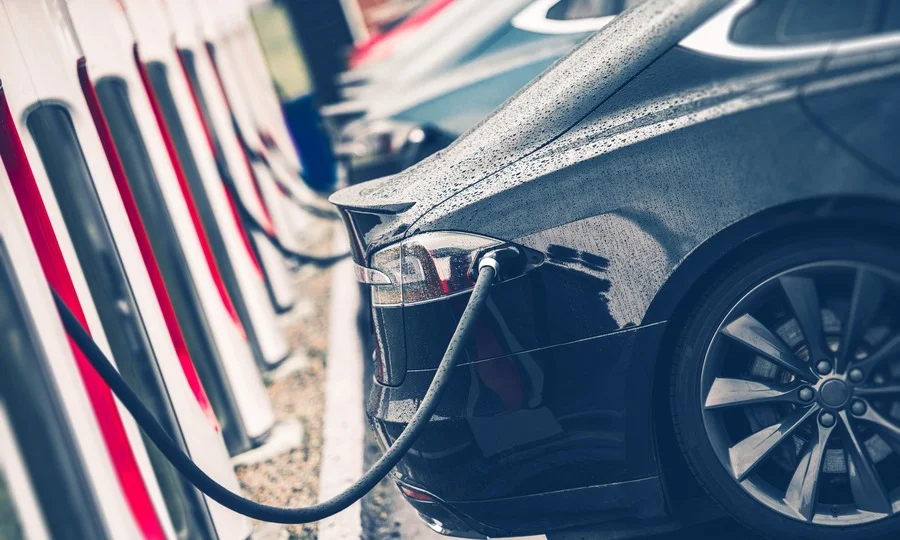
Brussels has fundamentally re-evaluated the role of electric vehicles. The European Commission now explicitly links electric cars to enhanced European security, moving beyond solely environmental justifications. This strategic shift comes amidst ongoing volatility in global oil markets.
For example, crude oil prices have seen dramatic fluctuations since 2022. Brent crude averaged over $120 per barrel in June 2022, following Russia’s full-scale invasion of Ukraine. Moreover, a near-collapse of shipping through the Strait of Hormuz in March 2026 reportedly pushed prices up by a record 65 percent in a single month. By mid-September, a barrel cost approximately $107, representing a more than 50 percent increase year-on-year.
Europe remains heavily dependent on external sources for its energy. In 2024, the European Union relied on imports for 96.6 percent of its oil and petroleum products. Therefore, whoever controls oil supplies holds significant leverage over prices, impacting Europe’s economic stability.
Consequently, electrifying transport offers compelling advantages beyond climate considerations. Europe’s electricity grid draws from diverse sources, including solar, wind, nuclear, hydro, gas, and coal. An electric car adapts to whatever energy source powers the grid, unlike conventional vehicles tied to specific fuels.
The Commission officially acknowledged these benefits in its July 17 Electrification Action Plan. This plan highlights how electrification will reduce dependence on imported fossil fuels, bolstering Europe’s resilience to geopolitical shocks. It projects annual savings of €260 billion on the EU’s fossil fuel import bill by 2040. Furthermore, driving a battery-electric car could cost up to 78 percent less than a comparable fossil-fueled vehicle. Already, electric vehicles save the EU an estimated 140,000 barrels of oil daily.
Despite this clear diagnosis, policy implementation has been inconsistent. For years, the political argument for electric cars focused predominantly on CO2 standards and climate neutrality. This approach often felt like lecturing rather than persuasion, leading to public skepticism.
Polling data supports this observation. A YouGov survey for CLEPA found that only 8 percent of adults in five major European countries preferred a fully electric model for their next car. Similarly, Bloomberg Intelligence reported in 2024 that just 18 percent of prospective buyers in key European markets would choose a battery-electric car. Moreover, 68 percent wished to see the 2035 deadline for ending new petrol and diesel car sales either dropped or delayed. In response, the Commission itself proposed softening that target from a 100 to a 90 percent cut in exhaust emissions in December 2025.
National policies also reflect this inconsistency. In Poland, for example, former Prime Minister Mateusz Morawiecki’s 2016 aspiration for a million electric cars within a decade now seems more logical given recent oil shocks. By contrast, the current government, led by Donald Tusk, has taken different actions. Until August 31, it cut VAT on fuel to eight percent and capped pump prices, effectively subsidizing petrol and diesel. Meanwhile, NaszEauto, Poland’s national electric car subsidy, ran out of funds in January and closed to applications in April, with no successor scheme planned.
As a result, registrations for electric vehicles in Poland have declined. Poles registered 20,926 new battery-electric cars between January and August, a 2.1 percent drop from the previous year. August alone saw a 33 percent decrease, marking the fourth consecutive monthly decline. The Polish car industry association attributes this directly to the end of subsidies. Conversely, Germany offers grants of up to €6,000 for new electric cars, leading to a 48 percent rise in battery-electric registrations during the first half of the year. Across the entire EU, electric cars now constitute 20.7 percent of new registrations.
Carbon pricing also presents a significant inconsistency. Under the EU Emissions Trading System, power stations pay approximately €88 per tonne of CO2 emitted. This cost directly impacts electricity prices, which in turn affects electric car charging costs. However, petrol and diesel, refined from imported crude, will not be subject to EU carbon pricing until 2028. Therefore, Brussels currently prices the carbon in domestic energy sources that power electric cars but not yet the imported oil they are intended to replace. This directly impacts the drive towards electric car security.
Furthermore, there is no unified, EU-wide scheme to assist consumers in purchasing electric cars. While the Social Climate Fund can offer support like social leasing, the actual availability of help depends on individual national governments. Europe should therefore reframe its sales pitch. It needs to lead with price, convenience, and the strategic benefits of electric car security rather than relying on moral pressure. This approach will manage the transition away from coal at a sustainable pace, ensuring Europe’s own power sources remain robust while oil prices fluctuate due to Middle East conflicts. The electric car offers flexibility that Rudolf Diesel could only dream of: the power station changes, but the car remains the same. Brussels holds a strong argument; the critical question is whether it will effectively use it before cheaper oil leads drivers to forget the long-term value of switching.