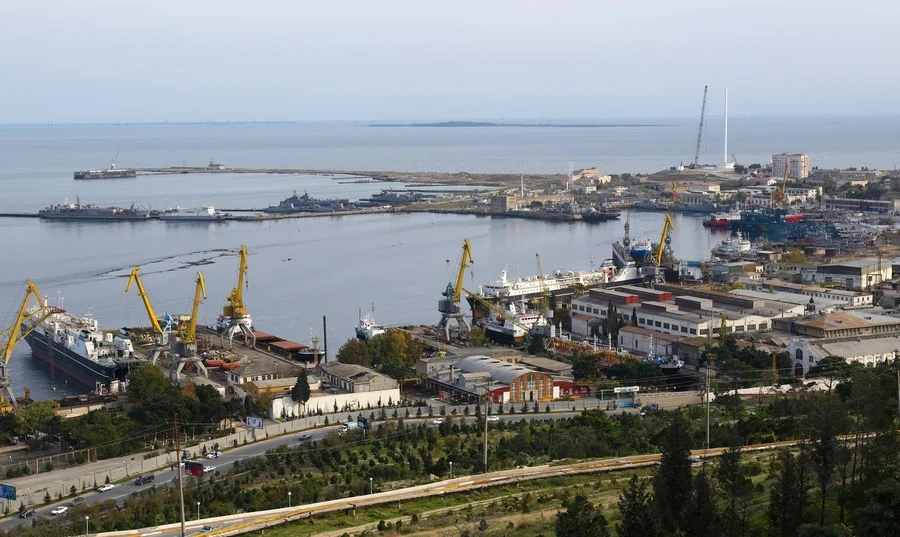
Strategic investments in the Trans-Caspian Corridor could unlock substantial economic growth and employment across Europe and Central Asia. This vital trade artery, also known as the Middle Corridor, links East Asia, Central Asia, the South Caucasus, Türkiye, and the rest of Europe. Upgrades and better integration along this route could significantly boost regional prosperity. Projections indicate a 3.3 percent rise in GDP and two million new jobs by 2040.
This significant growth stems from enhanced trade logistics. The report suggests corridor trade volumes could more than triple. Furthermore, travel times for goods would halve. These improvements depend on easing transport bottlenecks and boosting supply chain reliability. Nine countries along the corridor stand to benefit directly: Armenia, Azerbaijan, Georgia, Kazakhstan, Kyrgyzstan, Tajikistan, Türkiye, Turkmenistan, and Uzbekistan. This means better market access for nearly 200 million people.
The corridor’s importance grows amid increasing supply chain disruptions. Floods, droughts, and other weather shocks highlight the need for faster, more reliable trade routes. Many TCTC nations are major producers of energy, critical minerals, and food products. Therefore, this route offers a chance to reduce external vulnerabilities. It also transforms transit demand into domestic investment and business growth. A recent surge in regional trade adds further impetus for development of the Trans-Caspian Corridor.
Substantial investments are crucial for realizing this vision. Over $25 billion is needed for physical infrastructure through 2040. This includes significant upgrades to rail networks, maritime ports, and feeder roads. Many critical projects are already in progress. However, an additional $30 billion will fund ‘enabling’ investments. These include connecting road and rail links, new logistics hubs, and modern rolling stock. Digital systems are also vital to ensure smooth network operation.
Long-term success relies heavily on strong collaboration. Countries and operators must work together effectively. Reducing border delays and simplifying documentation are key steps. Furthermore, coordinating logistics hubs will deliver more reliable services. Stronger partnerships among governments and the private sector can attract further investment. This will transform the route into a wider platform for sustained regional development.
Specific priority actions will also improve corridor governance. First, adopting a single digital system is essential. This would replace fragmented paperwork with one entry point for all transport and trade data. Second, an integrated, market-oriented joint-venture operator is recommended. This entity would connect containerised rail and maritime services end-to-end. Third, enhanced corridor-wide coordination will monitor performance and resolve bottlenecks. Finally, modernising state-owned operators will improve commercial viability and regulation.
The corridor can become a powerful engine for faster growth and economic diversification. It promises poverty reduction and expanded private investment for participating nations. Ultimately, its potential extends beyond moving goods and people. It can evolve into a regional platform generating business, jobs, and local industrial growth. Therefore, continuous investment in infrastructure and services remains paramount.