The International Atomic Energy Agency (IAEA) is grappling with two significant incidents severely impacting global nuclear security. Undeclared nuclear material recently surfaced in Syria. Meanwhile, a deadly drone attack struck near Ukraine’s Russian-occupied Zaporizhzhia nuclear power plant.
Nuclear security relies on preventing accidents and protecting against theft. Radioactive incidents disregard national borders. Thus, international treaties, strict inspections, and constant UN monitoring form this global security architecture.
Armed conflicts pose the most severe threat to nuclear power plants. Modern reactors can withstand external impacts. However, active warfare renders fundamental safety concepts ineffective.
IAEA Director General Rafael Grossi outlined five core principles for conflict zone NPPs. These include banning shelling, prohibiting their use as weapons depots, ensuring external power, protecting vital supply lines, and preventing sabotage.
Even after shutdown, reactors need continuous electricity for fuel cooling. A permanent external power grid failure, combined with malfunctioning emergency generators, risks a meltdown. This occurs even if the reactor pressure vessel remains intact. Facility safety depends heavily on on-site personnel. Under stress, fire, or without proper shift rotations, human error risks increase dramatically.
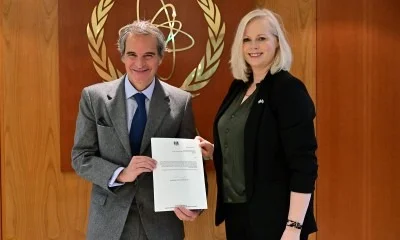
In a major development, IAEA staff discovered several metric tons of undeclared nuclear material in Syria. This material was found at a previously unguarded site. Director General Grossi announced the discovery in Damascus, noting the IAEA initiated the inspection. It followed an invitation from Syria’s new interim government, led by President Ahmed al-Scharaa.
Syrian Interim Foreign Minister Assad al-Schaibani called this a “legacy of the former regime.” The material could have been misused, undetected for years. Samples are now collected, and an initial review is complete. The IAEA officially safeguards this material. Syria officially denies any nuclear program. However, in 2007, Israeli forces reportedly destroyed a suspected nuclear reactor in eastern Syria. The IAEA later classified this as likely military, possibly built with North Korean assistance.
Separately, a severe drone explosion occurred early on August 18 near the Zaporizhzhia Nuclear Power Plant. This attack, striking around 6:00 a.m., resulted in at least one fatality and up to 17 injuries. The Russian-appointed plant manager called it the most serious incident directly affecting staff. Moscow blamed Ukrainian forces. Director General Grossi urgently appealed for an end to attacks on nuclear facilities and personnel, citing immense nuclear safety threats.
This incident marks the latest in critical safety breaches at Europe’s largest nuclear power plant. On August 8, the plant experienced its 25th loss of external power (LOOP) since the war began. Emergency diesel generators activated for cooling. The main 750 kV power line remains severely damaged since March. The plant currently relies on only one 330-kV backup line.
Persistent risks of power outages and fuel delivery issues continue. The plant increased water levels in spent fuel pools for all six reactors. This buys time before water boils during a total power failure. The IAEA also reports near-daily air raid alerts at other Ukrainian nuclear sites. Unmanned drones are frequently observed in exclusion zones.