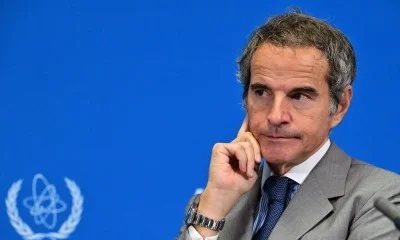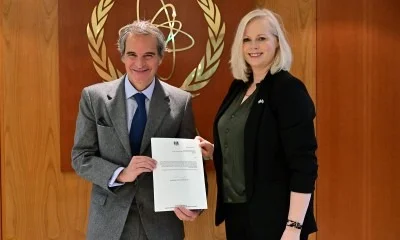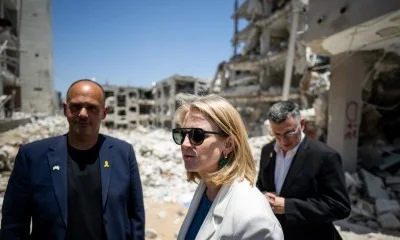
Austrian Foreign Minister Beate Meinl-Reisinger recently engaged in Austrian diplomatic efforts with Iranian Foreign Minister Abbas Araghchi. Their telephone conversation highlighted the urgent need for a return to diplomatic solutions. This effort aims to stabilize the tense situation across the Near and Middle East.
Minister Meinl-Reisinger emphasized a crucial point: “There can be no military solution. A diplomatic solution is possible.” This strong statement followed her discussions with U.S. counterpart Marco Rubio in Washington.
This Austrian initiative unfolds against a backdrop of frozen U.S.-Tehran relations. Iran’s leadership currently rejects direct talks with Washington. They cite repeated U.S. violations of a June ceasefire agreement as justification.
Therefore, European diplomats, including Austria, are assuming a vital role. They serve as a communication channel between the estranged parties. Austria leverages its traditional neutrality, its status as host to the IAEA, and its upcoming membership in the UN Security Council (2027–28).
A central focus of the recent discussion was the Strait of Hormuz. This critical chokepoint is vital for global oil transport and maritime trade. Meinl-Reisinger stressed that freedom of navigation remains a top priority. A prolonged blockade would devastate the global economy, potentially causing severe food crises in the Global South due to shortages.
For its part, Tehran mentioned ongoing talks with neighboring states like Oman regarding strait regulations. Iran also accused the other side of further escalating the conflict.
The long-stalled debate over Iran’s nuclear program also came up. Meinl-Reisinger advocated for a new agreement, fully involving the International Atomic Energy Agency (IAEA). Vienna previously hosted the original 2015 nuclear deal (JCPOA), from which the U.S. unilaterally withdrew in 2018. Iran subsequently increased its uranium enrichment activities, and the current status of its facilities remains unclear after recent U.S. military strikes.
Despite these significant Austrian diplomatic efforts, prospects for a breakthrough remain slim. Austria lacks substantial economic or military leverage. Europe also appears deeply divided and largely ineffective in the Middle East conflict.
The U.S. administration, under President Trump and Secretary of State Rubio, relies on heavy pressure and military deterrence. Negotiations from Washington often occur from a position of strength. Meanwhile, Iran views European appeals as mere attempts to buy time for the U.S. and Israel. Israel’s leadership seeks to weaken Iran’s nuclear program and its regional allies through military means.
Ultimately, Meinl-Reisinger’s call demonstrates professional mediation diplomacy. However, it is unlikely to lead to immediate resolution. European initiatives typically serve as useful messengers, maintaining communication channels should the main parties eventually decide to negotiate.